Narrow Aisle Storage is becoming a practical response to rising warehouse costs, limited floor space, and persistent labor shortages. By reducing aisle widths, facilities can add pallet positions without expanding their buildings. The trade-off is clear. Specialized trucks, accurate racking, and disciplined inventory control become essential.
MHI’s 2024 Annual Industry Report shows that supply chain professionals continue increasing investment in automation and digital technologies. Its findings also highlight ongoing workforce challenges across warehousing and logistics. The 2024 CBRE Global Industrial and Logistics Occupier Survey reports continued pressure on industrial space and operating efficiency. These trends explain why narrow aisle systems attract manufacturers, distributors, and third-party logistics providers. Yet, the right solution depends on load weight, pallet dimensions, ceiling height, turning radius, and local safety requirements.
This guide examines China’s top 10 Narrow Aisle Storage manufacturers through practical and technical criteria. These include rack engineering, forklift compatibility, storage density, customization, testing procedures, installation support, and after-sales service. Product range matters. So does evidence from real projects. A polished catalog is not enough. A low quotation may hide installation risks, weak components, or delayed spare parts.
The ranking is not absolute. No ranking is perfect. Buyers should verify certifications, structural calculations, load tests, reference sites, and warranty terms before signing contracts. Data from the China Federation of Logistics and Purchasing, MHI, and CBRE provides useful market context, but site-level measurement remains decisive. A warehouse drawing cannot reveal every operational problem. Careful evaluation can.
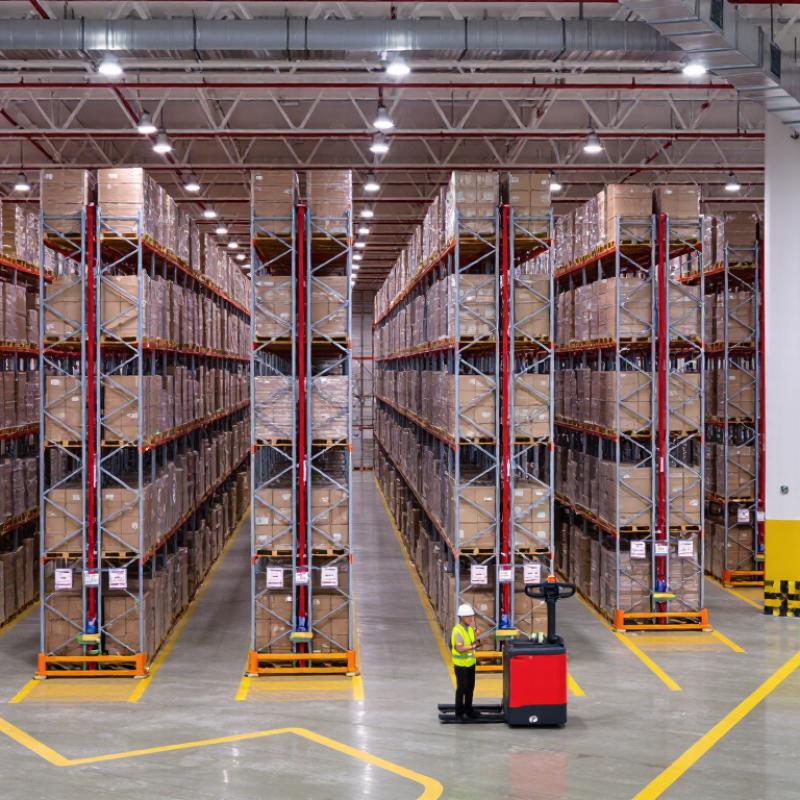
Narrow aisle storage systems use reduced aisle widths to increase pallet capacity within the same building. Standard aisles may require three meters or more, while narrow aisle layouts often work within about 1.8 to 2.5 meters. Exact measurements depend on the truck, pallet size, rack height, and operator controls.
The system usually combines selective pallet racks with specialized reach trucks or very narrow aisle equipment. Some facilities use guided vehicles, floor rails, or positioning sensors for safer movements. During site assessments, experienced engineers check column spacing, floor flatness, fire protection, lighting, and emergency access. A few centimeters can affect turning clearance. That detail matters.
These systems matter because warehouse land is expensive, especially near major industrial centers in China. More vertical storage can reduce expansion pressure and shorten travel distances.
However, higher density does not automatically mean better performance. A warehouse may hold more pallets but move them more slowly if picking routes are poorly planned. That mistake is common.
Real results depend on inventory turnover, pallet conditions, battery charging, and staff training. Fast-moving goods may need easier access than slow reserve stock. A careful supplier should provide load calculations, rack protection, inspection guidance, and maintenance procedures. It should also explain limitations clearly. Perfect efficiency is unlikely. A thoughtful design leaves room for people, repairs, and unexpected delays.
China Top 10 Narrow Aisle Storage Manufacturers
How China’s Top 10 Manufacturers Are Selected and Compared
China’s top 10 narrow aisle storage manufacturers are not selected by visibility alone. The comparison begins with verified production experience, technical certifications, and completed warehouse projects. We examine how each manufacturer designs systems for limited aisle widths, high rack heights, and frequent forklift movement. Factory visits, quality records, and customer references provide stronger evidence than promotional claims.
Technical capability carries significant weight. We compare rack load calculations, steel grades, surface treatment, tolerance control, and component testing. We also review compatibility with reach trucks, guided vehicles, and warehouse management systems. Small details matter. A poorly aligned beam can slow daily operations and increase maintenance work. Installation guidance and operator training are assessed through practical project records, not promises.
Commercial reliability is measured over time. Delivery consistency, spare-part availability, warranty handling, and after-sales response all influence the ranking. We also compare customization ability, quotation clarity, and total ownership cost. The lowest initial price is rarely the strongest choice. No scoring model is perfect. A manufacturer may perform well in heavy-duty projects but lack experience with smaller facilities. Market data can also change quickly, so rankings require regular review and honest correction.
Selection and comparison framework based on the factors most relevant to narrow-aisle storage projects. The percentages represent editorial evaluation weights rather than data from any individual company or brand.
The framework prioritizes operational safety, space utilization, lifting capability, service support, project customization, and total cost of ownership. Final manufacturer selection should also verify current certifications, published specifications, local service coverage, and customer references.
China’s leading narrow aisle storage manufacturers serve warehouses where every meter matters. One profile focuses on selective pallet racking for high-density distribution centers. Its engineers commonly specify guided trucks, reinforced frames, and aisle widths near 1.8 meters. Another specializes in very narrow aisle systems, using rail guidance and warehouse mapping to reduce driver error. Precision matters here.
A third manufacturer builds adjustable pallet systems for food, beverage, and industrial storage. Its designs often include galvanized components, impact guards, and load labels. A fourth develops automated narrow aisle solutions with shuttle vehicles and control software. A fifth combines mezzanines with racking, helping manufacturers use vertical space without expanding the building.
A sixth is known for mobile racking, which can close unused aisles and increase storage density. That benefit depends on floor quality.
The remaining four profiles show different strengths. One focuses on heavy-duty systems for metal, machinery, and construction materials. Another provides customized racks for cold rooms, where corrosion protection and temperature resistance require careful testing. A third offers modular shelving for e-commerce warehouses, supporting frequent SKU changes and faster picking. The last profile emphasizes export-ready engineering, documentation, and installation guidance for overseas projects.
Site experience improves these systems, but mistakes still happen. Load assumptions may be incomplete. A practical buyer should verify steel thickness, weld quality, seismic requirements, truck compatibility, maintenance access, and after-sales response before approving a design.
China’s leading narrow aisle storage manufacturers focus on dense, adjustable systems. Their product lines commonly include selective pallet racking, very narrow aisle racking, drive-in racks, mezzanines, and mobile storage units. Beam levels often adjust in 50-millimeter increments. That detail matters when carton heights change.
55% of supply chain leaders plan to increase technology investment.
Automation is becoming practical, not merely impressive. The 2024 MHI Annual Industry Report states that 55% of supply chain leaders plan to increase technology investment. It also reports that 43% face difficulty finding qualified workers. This explains the growing use of stacker cranes, shuttle systems, warehouse control software, barcode scanning, and guided vehicles.
Good manufacturers connect these tools with rack design, floor loading data, and fire-safety planning. A machine should serve the aisle, not dominate it.
E-commerce warehouses need fast picking and short replenishment cycles.
Cold-storage facilities require corrosion-resistant finishes, stable sensors, and reliable performance below freezing.
Automotive plants often use small-load racks near assembly lines.
Third-party logistics sites prefer modular layouts because inventory changes quickly.
China’s cold-chain logistics development reports estimated the sector’s market value at more than RMB 500 billion in 2024, creating demand for higher-density storage.
Yet density can reduce visibility. A polished layout may still create unsafe blind spots or slow emergency access.
Site trials, load testing, and operator feedback remain essential.
Choosing a Chinese narrow aisle storage manufacturer requires more than comparing prices. Start with your warehouse drawings, pallet dimensions, load weights, and forklift turning radius. A reliable supplier should review these details before recommending a rack configuration.
Ask for engineering calculations, material specifications, welding standards, and load test records. Check whether the proposed system follows applicable local safety requirements. Factory experience matters. Request photographs of completed warehouses, customer references, and evidence of quality inspections. If possible, arrange a factory visit or a live video inspection.
Look closely at steel thickness, coating consistency, cutting accuracy, and packaging methods.
Communication can reveal practical differences. Your manufacturer should provide clear drawings, installation instructions, delivery schedules, and replacement procedures. I have found that quick replies do not always mean strong engineering support. A polished catalog can still hide weak after-sales service. Ask technical questions about uneven floors, future expansion, and damaged components. Their answers should include measurements and solutions, not vague promises. Confirm who checks the final design and who handles installation training. The cheapest quotation may exclude essential bracing, guards, or transport costs. That mistake becomes expensive after the first forklift movement. Choose a supplier that documents each stage and accepts reasonable inspection before shipment.
It uses reduced aisles to store more pallets inside the same building. Aisles commonly measure about 1.8 to 2.5 meters. Exact width depends on trucks, pallets, rack height, and controls.
Narrower aisles create more room for racks and vertical storage. A warehouse may store extra pallets without expanding its building. However, more capacity can slow movement if routes are poorly planned.
Most systems use selective pallet racks with reach trucks or very narrow aisle equipment. Some facilities add guided vehicles, floor rails, or positioning sensors. The equipment must match turning clearance and rack height.
Engineers should check column spacing, floor flatness, lighting, fire protection, and emergency access. They should also measure pallet sizes and truck turning radii. A few centimeters can change the entire layout.
E-commerce sites benefit from fast picking and short replenishment routes. Cold-storage facilities need corrosion-resistant finishes and reliable sensors. Automotive plants often use small-load racks near assembly areas. Third-party logistics warehouses need flexible layouts.
No. Dense storage can reduce visibility and create longer picking routes. It may also produce blind spots or limit emergency access. More pallets do not guarantee faster operations. That assumption deserves checking.
Common tools include barcode scanning, warehouse control software, shuttle systems, and guided vehicles. Stacker cranes may support taller storage areas. Automation should support the aisle, not dominate it.
Share warehouse drawings, pallet dimensions, load weights, and truck measurements. Request engineering calculations, material details, load tests, and inspection records. Review completed projects and packaging methods. A polished catalog is not enough.
Ask who approves the final design and who trains installation teams. Confirm delivery dates, replacement procedures, inspection stages, and maintenance instructions. Discuss uneven floors and damaged rack components. Vague answers are a warning.
A low quotation may exclude bracing, guards, transport, or training. Poor battery planning can interrupt daily operations. Ignoring future expansion may force costly changes later. The design will not be perfect. Leave space for repairs and delays.
This article presents a practical overview of Narrow Aisle Storage systems, explaining how they maximize warehouse capacity while maintaining efficient product access and organized operations. It explores the main system types, operating principles, and the advantages they offer for warehouses facing limited floor space, growing inventory, or higher order-handling requirements. The article also introduces a clear approach for comparing China’s top 10 manufacturers based on product quality, engineering expertise, customization capabilities, safety standards, production capacity, service support, and overall value.
In addition, the article reviews the key products, technologies, and industries commonly served by these manufacturers, including distribution, manufacturing, retail, and logistics applications. Rather than focusing only on rankings, it highlights how different suppliers address practical warehouse challenges through equipment design, automation compatibility, installation support, and long-term maintenance. The final section provides guidance on selecting the right Chinese manufacturer by considering storage requirements, facility conditions, budget, integration needs, delivery expectations, and after-sales service.

JGY Shelf