7 Tips for Choosing Stacking Systems for Your Business?

Time:2026-10-17 Author:Sienna
0%

Choosing the right Stacking Systems can shape warehouse capacity, worker safety, and order speed. The decision deserves more than a catalogue comparison. MHI’s 2024 Annual Industry Report found that 55% of supply chain leaders planned to increase technology and innovation investment. That spending still needs discipline. A taller rack is not automatically a better solution.

This guide presents seven practical tips for evaluating load capacity, ceiling height, aisle width, product turnover, installation limits, safety controls, and future expansion. The Council of Supply Chain Management Professionals continues to emphasize inventory visibility and operational efficiency as major priorities. Those priorities become physical decisions on the warehouse floor. Consider a pallet that weighs 900 kilograms, a forklift turning beside a column, or a picker reaching above eye level. Small details can decide whether a system performs smoothly or creates daily friction.

Safety comes before density. OSHA warehouse guidance highlights the importance of stable storage, clear aisles, inspections, and trained operators. For automated equipment, ISO 3691-4:2020 provides relevant safety principles for driverless industrial trucks. These standards support a professional evaluation, but they do not replace a site-specific risk assessment. No universal design exists. That is the uncomfortable part. A system that works in a high-volume distribution center may fail in a small facility with irregular stock. Measure actual workflows, speak with operators, and challenge optimistic supplier promises. The best Stacking Systems choice balances usable space, verified performance, compliance, maintenance access, and realistic business growth.
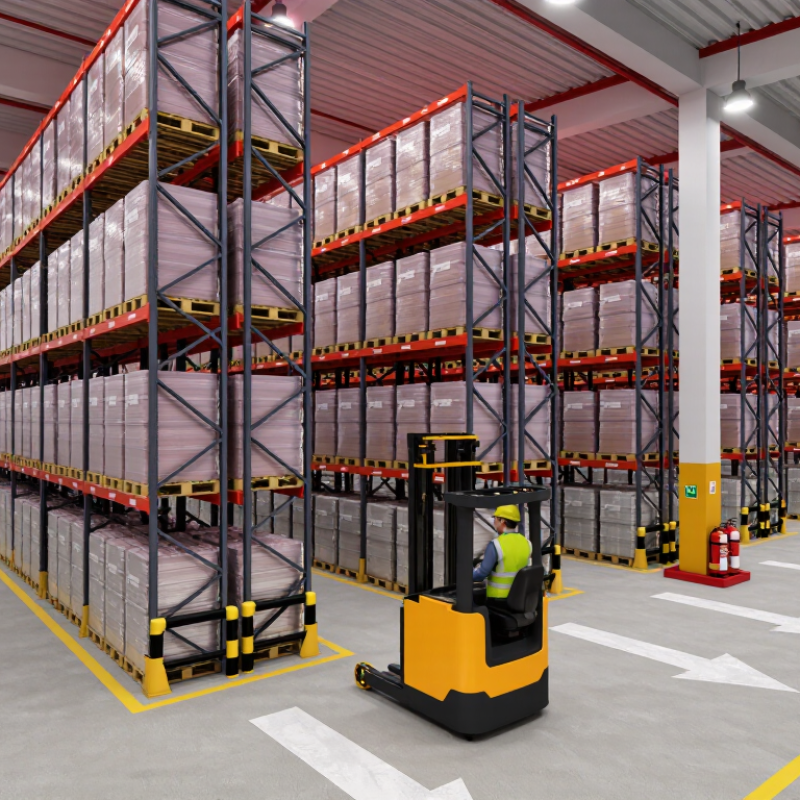
7 Tips for Choosing Stacking Systems for Your Business?

Define Your Business Needs and Stacking Objectives

Choosing a stacking system should begin with your operating reality, not a catalogue image. Record SKU dimensions, pallet weights, turnover rates, aisle widths, ceiling height, and floor capacity. A fast-moving beverage pallet needs different access than slow-moving spare parts. Measure peak inventory, not average inventory. That mistake is common.

The Material Handling Industry Association’s 2024 Annual Industry Report found that 55% of supply chain professionals expect labor shortages to continue. This makes access time and handling effort important objectives. Decide whether your priority is storage density, faster picking, safer movement, or easier expansion. You may need several objectives, but rank them. “Maximum capacity” can create slower retrieval and more forklift traffic.

Safety must be measurable. The U.S. Bureau of Labor Statistics reported 2.6 million nonfatal workplace injuries and illnesses in private industry during 2023. Review load ratings, rack protection, inspection routines, fire clearances, and pedestrian paths before selecting equipment. Test the proposed layout with real pallet sizes and turning movements. On paper, it may fit. On the floor, it may not. A pilot zone with ten to twenty locations can reveal unstable loads, blocked access, and uncomfortable picking heights before a full investment. Include future volume growth, but avoid paying for unused height or automation. Your best system is the one your team can operate correctly every shift.

Compare Stacking System Types and Configurations

Choosing a stacking system starts with comparing how each configuration uses space, labor, and product access. Floor stacking suits stable cartons with predictable turnover. It costs little, but lower layers can suffer crushing. Selective pallet racking offers direct access to every load and supports varied inventory. However, it needs wider aisles and careful load calculations.

Drive-in systems provide dense storage for large quantities of similar goods. They reduce aisle space, though older stock may remain trapped behind newer pallets. Push-back configurations improve access while using depth efficiently, but their moving rails require regular inspection. Mobile systems can create more storage capacity in a fixed building. They also depend on reliable floor conditions and disciplined operating procedures.

Measure ceiling height, pallet dimensions, load weight, and forklift turning space before selecting equipment. Check fire clearances and local safety requirements with a qualified professional. Review inventory turnover, because high-frequency items need faster access than reserve stock. Ask whether future product sizes may change; a rigid layout can become expensive to alter. Consider installation, inspection, repairs, and operator training, not only the purchase price. A simple layout plan can expose blocked routes and awkward picking positions. Test one section with real pallets when possible. Paper calculations can miss daily frustrations. Track damage, retrieval time, and unused space after installation, then adjust the configuration when evidence supports it.

7 Tips for Choosing Stacking Systems for Your Business

Compare stacking system types and configurations by accessibility, storage density, selectivity, and operational flexibility. The chart uses common planning-reference values; actual performance depends on building height, pallet dimensions, equipment, safety clearances, and inventory turnover.

Seven Practical Selection Tips

  1. Measure available floor area and clear storage height before selecting a configuration.
  2. Match the system to inventory turnover and the required stock-rotation method.
  3. Prioritize selective access when many stock-keeping units must remain immediately available.
  4. Consider drive-in or push-back systems when high-density storage is more important than direct access.
  5. Check compatibility with forklifts, pallet sizes, aisle widths, and fire-protection requirements.
  6. Compare total cost of ownership, including installation, maintenance, handling equipment, and labor.
  7. Allow for future expansion, changing product volumes, and seasonal demand.

Evaluate Load Capacity, Safety, and Workplace Requirements

Choosing a stacking system starts with the load, not the appearance. Record the weight of each pallet, including packaging and uneven distribution. Then check the system’s rated capacity at every storage level. A rack may hold one heavy pallet but fail under repeated loading, impact, or tilted placement. Leave a margin for real operating conditions. This is often missed. Ask an engineer or qualified supplier to verify floor strength, anchors, and load paths.

Safety depends on people as much as steel. Measure forklift turning space, aisle width, ceiling height, lighting, and emergency access. Protect uprights near traffic lanes with suitable guards. Use clear labels showing maximum loads and approved pallet positions. Workers need practical training, not just a signed attendance sheet. A short trial can reveal awkward reaches, blocked sightlines, or unstable hand stacking. Watch the trial carefully. Confirm local workplace, fire, and building requirements before installation.

Workplace requirements may change by shift, product type, or season. Cold rooms, damp areas, dust, and frequent washing can affect materials and maintenance. Check inspection intervals, repair procedures, and who can remove damaged components. Keep records with photos and dates; they make small defects easier to track. I would not treat a capacity chart as final proof. Real sites are messier than drawings. Reassess the layout after a month, especially if operators create informal shortcuts. That feedback may expose a design choice that looked sensible on paper.

Assess Space Efficiency, Access, and Operational Flexibility

Choosing a stacking system begins with the space beneath the ceiling. Measure clear height, column spacing, floor loading, and sprinkler clearance. Then calculate usable cubic capacity, not just floor coverage. A tall rack may hold more pallets, but poor access can slow every order.

Seven checks deserve attention: measure real pallet dimensions; test aisle width with loaded equipment; protect pedestrian routes; map pick frequency; compare fixed and adjustable levels; verify load ratings; and trial the layout during peak demand.

A 2.4-metre aisle may look efficient on paper, yet become stressful when operators turn with unstable loads. Access matters. Leave room for inspection, maintenance, and emergency movement. Safety guidance should be confirmed with qualified professionals and local requirements.

Operational flexibility also deserves a hard look. The 2024 MHI Annual Industry Report stated that 55% of supply-chain leaders increased technology investment, suggesting that adaptable layouts are gaining attention.

Gartner projected in 2023 that 80% of warehouses could use robotics by 2028, compared with 10% then. That forecast may prove too optimistic, but it still raises a useful question: can the stacking system accept new handling equipment later?

Adjustable beams, modular bays, removable sections, and clearly marked locations can reduce costly redesigns. I would not trust a perfect drawing alone. Test one working zone, record travel time, access delays, damage, and replenishment effort, then revise the design. Peak days expose weaknesses.

Review Costs, Maintenance, and Long-Term Scalability

7 Tips for Choosing Stacking Systems for Your Business

Tip 1: Calculate the full cost. Include equipment, installation, floor preparation, training, and future adjustments. A low purchase price can hide expensive changes later. Tip 2: Measure your storage area carefully. Record ceiling height, aisle width, floor strength, and access points. I once saw a warehouse buy taller units that could not pass through its loading doors. Small measurements matter.

Tip 3: Review maintenance requirements before purchasing. Ask how often wheels, locks, rails, and lifting parts need inspection. Choose designs with accessible components and clear service instructions. Tip 4: Check spare-part availability. Delayed repairs can stop picking operations for hours. That cost may exceed the original maintenance budget. Tip 5: Request practical training for operators. Safe handling reduces damage and improves daily consistency. Training is often treated as an afterthought.

Tip 6: Test long-term scalability. Can the system accept additional levels, bays, or modules without replacing everything? Leave room for changing inventory sizes and seasonal demand. Tip 7: Compare expected capacity with real usage. Maximum capacity is not always usable capacity. Heavy cartons may require wider spacing, stronger supports, or slower movement. Ask for load calculations and written performance limits. Independent inspections can strengthen confidence, especially when plans change. Be careful with optimistic forecasts. A system that fits today may become restrictive within two years.

7 Tips for Choosing Stacking Systems for Your Business? – Review Costs, Maintenance, and Long-Term Scalability
Tip Decision Focus Stacking System Typical Storage Profile Indicative Capital Cost Maintenance Profile Scalability Best-Fit Conditions
1 Match the system to inventory selectivity
Assess how often each SKU is accessed and whether every pallet must be immediately available.
Selective pallet racking High selectivity; generally one pallet accessible per location. Typical storage density is approximately 80–120 pallet positions per 1,000 sq. ft., depending on aisle width, ceiling height, and pallet dimensions. $100–$250 per pallet position
Racking and installation only; building work and material-handling equipment excluded.
Low to moderate. Requires routine inspections, beam and frame checks, anchor checks, and replacement of damaged components. High. Additional bays can usually be added in phases if the floor layout, fire protection, and building height allow. Warehouses with many SKUs, frequent picking, and a need for direct access to every pallet.
2 Prioritize density when SKU variety is limited
Compare the value of space savings with reduced selectivity.
Drive-in pallet racking High density with last-in, first-out access in most configurations. Often suitable for several pallets of the same SKU or batch. $150–$350 per pallet position
Costs vary with tunnel depth, load requirements, protection systems, and installation complexity.
Moderate to high. Rails, guides, uprights, and entry points are exposed to forklift impact and need frequent inspection. Moderate. Expansion is possible, but changes to tunnel depth, product mix, and forklift operating patterns may be disruptive. High-volume, low-SKU operations storing stable products with limited lot and date sensitivity.
3 Balance density with faster pallet access
Evaluate whether labor savings justify a more complex structure.
Push-back pallet racking High-density storage with multiple pallets stored front-to-back. Typically offers better selectivity than drive-in systems while retaining strong space utilization. $200–$450 per pallet position
Includes rack structure and load-handling components; installation and site conditions affect final cost.
Moderate. Rollers, carts, rails, stops, and pallet contact points require scheduled inspections and cleaning. Moderate to high. New lanes can be added, but aisle geometry, pallet standards, and load limits should remain consistent. Operations needing dense storage with multiple pallets per SKU and relatively high throughput.
4 Consider product rotation requirements
Use first-in, first-out access where shelf life, batch control, or expiry dates matter.
Pallet flow racking High-density FIFO storage using gravity rollers. Separate loading and picking faces can improve workflow and inventory rotation. $250–$550 per pallet position
Roller specifications, lane length, braking devices, and pallet quality influence cost.
Moderate. Rollers, brakes, lane separators, and load stops need routine checks; damaged pallets can interrupt flow. High for repeatable SKU profiles. Additional lanes can be added, although lane depth and pallet dimensions must be controlled. Perishable goods, date-sensitive inventory, and distribution operations requiring consistent FIFO movement.
5 Compare automation with labor availability
Assess throughput, operating hours, safety objectives, and the cost of manual handling.
Automated pallet storage and retrieval Very high vertical and space utilization with software-controlled storage and retrieval. Capacity depends on building height, equipment configuration, and throughput requirements. $1,000–$3,000+ per pallet position
Typically includes storage equipment and controls; building modifications, software integration, and commissioning may be additional.
High technical requirement. Preventive maintenance, sensors, conveyors, controls, software support, and spare-parts planning are essential. High when designed with modular equipment and open integration standards; expansion can require significant engineering and downtime planning. Large or labor-constrained facilities with predictable processes, high throughput, extended operating hours, and strong data discipline.
6 Measure total cost of ownership
Include energy, service contracts, inspections, repairs, labor, downtime, and training—not only purchase price.
Mobile pallet racking High space utilization because access aisles open only where needed. It can provide selective access while reducing fixed aisle requirements. $300–$800 per pallet position
Electrical or mechanical drive systems, floor preparation, controls, and safety features affect the investment.
Moderate to high. Moving bases, motors, rails, sensors, interlocks, and emergency systems require planned service and testing. Moderate. Capacity can be extended, but floor loading, rail layout, electrical supply, and evacuation routes must be reviewed. Facilities where floor area is expensive or limited and pallet access is intermittent rather than continuous.
7 Plan for future products, volumes, and compliance
Confirm that the selected system can accommodate changing pallet weights, dimensions, regulations, and operating methods.
Double-deep pallet racking Medium to high density with two pallets stored deep. It reduces aisle requirements but normally requires reach equipment designed for double-deep access. $150–$350 per pallet position
Equipment reach, rack configuration, load capacity, and building height influence the installed cost.
Moderate. Rack inspections remain important, while reach equipment and visibility aids require additional operational controls. Moderate. It can be expanded by adding bays, but SKU rotation, pallet uniformity, and equipment reach limits must be maintained. Businesses seeking more density than selective racking while retaining access to multiple SKUs and moderate selectivity.

Cost figures are broad planning ranges in USD per pallet position for comparison purposes only. They exclude land, building construction, taxes, permits, fire-protection upgrades, forklifts, software integration, and unusual site preparation. Final costs depend on region, load requirements, pallet dimensions, ceiling height, seismic conditions, labor rates, and applicable safety standards.

FAQS

How should I determine the required load capacity?

Weigh every pallet, including packaging and unevenly distributed goods. Check the rated capacity at every storage level. Leave a safety margin. Repeated loading can expose weaknesses. A capacity chart is not final proof.

Why does floor strength matter?

The floor must support the rack, stored goods, and operating forces. Ask a qualified professional to check floor strength, anchors, and load paths. A heavy pallet can still create trouble.

What workplace measurements should I take?

Measure aisle width, forklift turning space, ceiling height, lighting, and emergency access. Check sprinkler clearance and column spacing. A narrow aisle may look efficient. It can become stressful with an unstable load.

How can I reduce collision risks?

Install suitable guards around uprights near traffic lanes. Separate pedestrian routes from equipment movement. Mark approved pallet positions and maximum loads clearly. Keep sightlines open. Watch turning areas during a practical trial.

What training do workers need?

Workers need practical instruction on loading, unloading, inspections, and damaged components. A signed attendance sheet is not enough. Observe real tasks. Awkward reaches and blocked views may appear quickly.

How do environmental conditions affect a stacking system?

Cold rooms, damp areas, dust, and frequent washing can affect materials and maintenance. Set inspection intervals for these conditions. Record repairs with photographs and dates. Small defects become easier to track.

How can I test whether the layout works?

Test one working zone before full installation. Record travel time, access delays, damage, and replenishment effort. Try the layout during peak demand. Peak days matter.

Should the system support future operational changes?

Prefer adjustable levels, modular bays, removable sections, and clearly marked locations. Future equipment may need different space. Flexible design can reduce redesign costs. Still, forecasts can be wrong. Reassess after one month.

Conclusion

Choosing the right Stacking Systems begins with a clear understanding of your business needs, storage goals, available space, and daily workflow. Consider what materials you handle, how often items must be accessed, and whether your operations require flexibility for changing inventory. Compare different system types and configurations based on their suitability for your products, facility layout, and handling processes. Load capacity, stability, safety features, and workplace requirements should always be reviewed to support reliable and efficient operations.

Space efficiency is another important factor, but it should not reduce accessibility or slow down work. Evaluate how each option affects movement, organization, picking, and future expansion. Finally, compare initial costs with installation, maintenance, training, and long-term operating expenses. A well-planned solution should provide dependable performance today while remaining scalable as your business grows. By balancing functionality, safety, flexibility, and total value, you can select Stacking Systems that improve organization and support sustainable operational efficiency.

Sienna

Sienna

Sienna is a skilled marketing professional with a deep expertise in our company’s core products and services. With a passion for innovation and detail, she plays a pivotal role in crafting insightful blog posts that not only highlight the unique features of our offerings but also provide valuable......