Choosing the right storage system can shape warehouse speed, safety, and long-term operating costs. In 2026, global buyers are examining Push-Back Storage with greater care, not simply selecting the highest-density option. This system can store multiple pallets by SKU while using inclined rails and gravity-assisted movement. It often suits warehouses handling several pallet positions, limited aisle space, and moderate product rotation.
However, every facility has different demands. Product weight, pallet quality, forklift reach, rack height, temperature, and fire protection requirements must be reviewed before purchase. A cold-storage warehouse may need corrosion-resistant components, while a fast-moving distribution center may require easier access than maximum density. Small details matter. Uneven floors can affect installation. Damaged pallets can interrupt movement. These are practical issues that brochures may understate.
This guide explores the leading Push-Back Storage types for global buyers in 2026. It compares trolley systems, roller-based designs, structural configurations, and application-focused options. The discussion emphasizes load capacity, selectivity, safety features, installation quality, maintenance, and supplier reliability. Buyers should request tested specifications, clear drawings, inspection records, and references from comparable facilities. Certifications are useful, but they should support careful engineering review rather than replace it. No layout is perfect. Some recommendations may require adjustment after a site survey, product audit, or trial installation. A reliable decision balances storage density with daily usability, worker safety, and future expansion. That balance is often harder than expected.
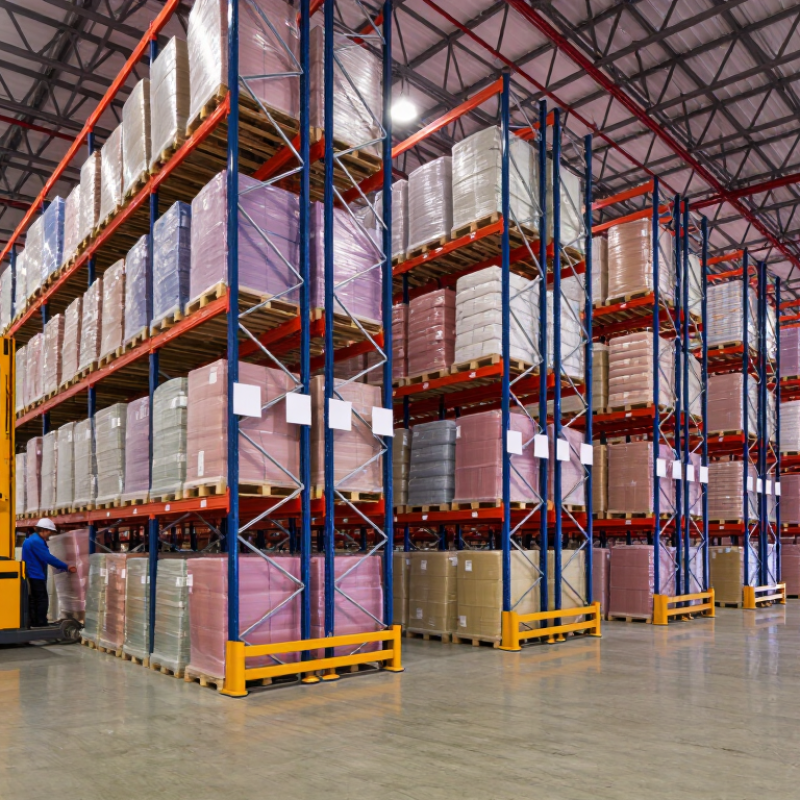
What Push Back Storage Is and How It Works
Push-back storage is a high-density pallet system that lets a forklift load and retrieve goods from one aisle. Each lane holds pallets of the same product. Pallets rest on wheeled carts set along inclined rails. When a new pallet enters, it pushes the previous one farther back. During picking, the front pallet is removed and the remaining carts roll forward. The result is last-in, first-out inventory rotation. That trade-off matters.
MHI’s 2023 Annual Industry Report found that 74% of surveyed supply-chain professionals viewed innovation and technology as a competitive advantage. The figure reflects broad industry attitudes, not a measured benefit of push-back racks. Still, storage design deserves the same careful evaluation as other warehouse investments. Push-back can reduce the number of aisles compared with selective racking, but it does not provide direct access to every pallet. It often suits batch goods with several pallets per product and predictable turnover.
Before specifying a system, measure pallet dimensions, load weights, forklift reach, and available clearances. Uneven or damaged pallets may catch on carts; inconsistent pallet sizes can also disrupt smooth movement. Keep each lane assigned to a compatible product, and check that the chosen LIFO sequence fits inventory needs. One detail is easy to underestimate: operators need clear loading and retrieval procedures. A dense layout helps only when it remains safe and practical to use.
2026 Top Push-Back Storage Types for Global Buyers: What Push-Back Storage Is and How It Works
Typical push-back rack lanes are configured from 2 to 6 pallet positions deep. The right depth depends on the load, forklift operation, and inventory requirements.
How it works: In a push-back lane, a forklift places a pallet at the front and pushes earlier pallets farther back on carts or rollers. When the front pallet is removed, the next pallet moves forward. This typically operates on a last-in, first-out (LIFO) basis. Lane depths shown are configuration options, not a universal capacity specification.
Key Components and Operating Configurations
A push-back rack lane combines upright frames, inclined rails, nested carts, end stops, and load-bearing beams. Forklift operators place pallets from the aisle. Each new pallet pushes the previous one deeper; unloading follows last-in, first-out order. The system suits several pallets of one SKU, but it reduces direct access to individual loads. That trade-off matters.
Lane depth depends on pallet size, load weight, and replenishment rhythm. Two- to six-pallet-deep layouts are common, but a deeper lane is not automatically better. Rail slope, cart clearance, and pallet condition affect movement. A damaged pallet can snag; uneven loading can create unsafe pressure. Verify these details with a site-specific layout and rated-load review.
MHI’s 2024 Annual Industry Report found that 55% of respondents planned to increase supply-chain technology investment over the next five years. That broad trend is not proof that push-back storage fits every operation. Buyers should compare it with selective access needs, aisle space, and forklift capability. Small details count. Measure actual loads, not just catalog dimensions. I would also test a representative lane before rollout; estimates can miss daily handling habits.
Top Push Back Storage Types for 2026
Push-back storage systems in 2026 mainly differ by their load-support design and lane configuration. Cart-based systems use nested carts on inclined rails, with each new pallet pushing the previous one backward. Wheel- or roller-based systems support movement along a sloped track. Both typically operate on a last-in, first-out basis. That matters.
Single-lane layouts suit a small number of pallet positions per SKU. Multi-lane layouts separate products, while deeper lanes increase density for fast-moving inventory. These systems can work well where forklift access and floor space are limited, but they need compatible pallet dimensions, stable loads, and clearly planned aisle widths. The deeper layout can look efficient on paper, yet slow-moving stock may remain buried longer than expected. That deserves a second look.
Tips: Confirm pallet weight, size, and condition before selecting a system. Ask a qualified storage professional to check rack capacity, floor conditions, and operating clearances. Test the proposed lane depth against actual stock turnover—not just the maximum pallet count.
2026 Top Push Back Storage Types for Global Buyers - Top Push Back Storage Types for 2026
| Configuration |
Typical Lane Depth |
Storage and Retrieval |
Suitable Inventory |
Main Advantage |
Key Consideration |
| Shallow push-back |
2 pallets deep per lane |
A newly loaded pallet pushes the pallet already in the lane toward the back. Retrieval follows last-in, first-out (LIFO). |
Small batches of a single SKU with regular replenishment. |
More storage density than selective pallet racks while keeping lane operation straightforward. |
Each lane is most effective when assigned to one compatible SKU. |
| Medium-depth push-back |
3–4 pallets deep per lane |
Nested carts or a compatible moving support system travel along inclined rails as pallets are loaded and retrieved. |
High-turnover products stored in multiple pallets per SKU. |
Balances lane capacity and access for operations with repeatable pallet loads. |
Pallet condition, load stability, and forklift operating clearances need to be checked. |
| Deep-lane push-back |
5–6 pallets deep in some designs |
Loading and retrieval take place from the same aisle face; pallets within a lane are accessed in LIFO order. |
Large quantities of the same SKU with predictable rotation. |
Can increase pallet storage per aisle compared with more accessible, lower-density layouts. |
Greater depth can make stock rotation and SKU allocation more restrictive. Actual depth depends on the engineered system. |
| Single-wide lane layout |
One pallet position across; depth selected to suit the SKU |
Each lane is allocated to a product, with loading and retrieval from the aisle-facing end. |
Facilities needing more lane-level SKU separation or simpler inventory assignment. |
Straightforward lane identification and SKU allocation. |
Requires enough lanes to accommodate the number of products and replenishment batches. |
| Multi-lane push-back block |
Multiple parallel lanes, each with a specified pallet depth |
A block combines several lanes and storage levels; equipment and rack design determine the usable layout. |
Warehouses consolidating larger volumes of a limited range of palletized products. |
Uses a shared aisle-facing arrangement to group higher-volume inventory. |
Layout planning should account for load specifications, aisle access, fire protection, and local building requirements. |
Note: Lane depths and configurations are common planning examples, not universal specifications. Final design should be verified against pallet dimensions, load weights, handling equipment, building conditions, and applicable local codes.
How to Match Storage Types to Warehouse Needs
Choosing a push-back system starts with the work each lane must do.
This high-density storage suits warehouses holding several pallets of the same product, with frequent replenishment and retrieval from the aisle. It typically operates on a last-in, first-out basis, so it may not fit goods that need strict first-in, first-out rotation. Check product flow before comparing rack layouts.
Cart-based lanes use nested carts that move as pallets are loaded and unloaded. They can handle varied pallet weights when the rack is properly specified, but carts need compatible pallets and careful loading. Roller-based designs use sloped tracks instead; they can reduce moving parts, though debris and uneven pallets may affect smooth travel.
Space matters.
Match lane depth to pallet quantity, daily picks, forklift reach, and available aisle width—not just the maximum storage target.
Walk the proposed layout with the people who load it. Measure actual pallets, including overhang, and confirm lift-truck clearance at every beam level. A dense lane can save floor space yet slow access when many products share too few lanes. That trade-off is easy to miss on a drawing. It is also worth checking load data and maintenance access with a qualified rack professional before installation; a neat plan can still prove awkward during a busy shift.
Global Buying Criteria for Safety, Quality, and Compliance
Push-back storage suits operations that need several pallet positions per aisle and access from the front lane. Common configurations use nested carts on inclined rails, with two-to-six pallet depths depending on the load and site design. Depth is not a simple capacity gain. Deeper lanes depend more heavily on consistent pallets, clear loading rules, and trained forklift operators. During evaluation, request load charts for each beam level, lane depth, and pallet overhang. A full-scale trial with the heaviest intended pallet can reveal issues that drawings miss.
A safety review should check frame anchoring, rail condition, upright protection, aisle clearance, and visible capacity labels. Confirm that design calculations reflect local seismic conditions, floor strength, and applicable building and workplace requirements. Requirements vary by location, so an independent engineering review may be appropriate. For quality control, inspect weld consistency, coating coverage, cart movement, and replacement-part availability before purchase. Ask for inspection records and maintenance intervals, not only a polished brochure. Compliance documents should match the delivered configuration. That can be missed. One uncomfortable question remains: will operators follow the loading sequence during a busy shift? Observe real work, not just a showroom demonstration; small deviations can damage rails or create uneven loads.
Conclusion
Push-Back Storage is a high-density pallet storage system that lets operators place multiple pallets deep in a lane while keeping access from the loading aisle. It typically uses inclined rails and movable carts: each newly loaded pallet pushes the previous one farther back, and pallets move forward by gravity as the front position is emptied. Core components and operating configurations can vary, including cart and rail designs, lane depth, and arrangements suited to different pallet loads and handling equipment.
The main Push-Back Storage types for 2026 can be compared by capacity, operating method, and fit with a facility’s workflow. Choosing the right system means assessing inventory turnover, pallet dimensions and weight, available floor space, aisle requirements, and forklift capabilities. Global buyers should also review structural quality, load ratings, installation requirements, operator safety features, and applicable local standards. A careful assessment helps balance storage density, accessibility, durability, and safe day-to-day operation.

 JGY Shelf